
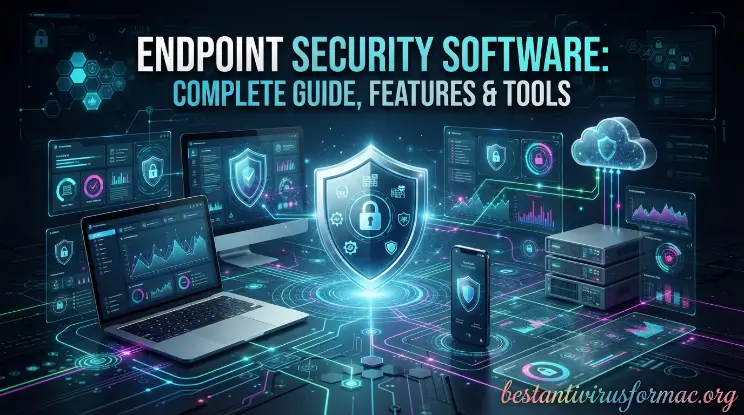
Welcome to bestantivirusformac. In today’s hyper-connected digital environment, businesses rely on devices such as laptops, mobile phones, servers, and cloud systems. Each device can become a target for cybercriminals, making strong protection essential. Endpoint Security Software helps protect connected devices by continuously monitoring activity, detecting suspicious behavior, and responding to threats in real time. This proactive approach helps prevent data breaches, ransomware, and unauthorized access.
With remote and hybrid work increasing, endpoint protection software has become even more important. By using technologies such as artificial intelligence, behavioral analysis, and cloud-based threat intelligence, it provides multi-layered protection against evolving cyber threats. As a result, Endpoint Security Software has become a key part of modern cybersecurity, helping businesses protect sensitive data and maintain secure operations.
What Is Endpoint Security Software?
Endpoint Security Software is a cybersecurity solution designed to protect all devices connected to a business network from cyber threats such as malware, ransomware, phishing, and unauthorized access. It goes beyond traditional antivirus tools by continuously monitoring devices, detecting suspicious behavior, and responding to threats in real time. This makes it a core part of modern endpoint protection software strategies used by organizations to secure digital environments. Unlike basic antivirus programs that rely mainly on known virus signatures, Endpoint Security Software uses advanced technologies like AI, behavioral analysis, and cloud intelligence. It can detect both known and unknown threats, including zero-day attacks, making it more effective for modern businesses that operate in complex IT environments.
Endpoint Devices Covered
Endpoint Security Software protects all devices that connect to a network, ensuring complete visibility and control over potential entry points. These devices form the primary attack surface for cybercriminals, so securing them is essential for maintaining strong cybersecurity defenses.
- Laptops and Desktops: Store business data and are commonly targeted by malware and phishing attacks.
- Mobile Devices: Used for remote access; vulnerable due to public networks and apps.
- Servers: Store critical data and require strong protection from unauthorized access.
- IoT Devices: Smart devices with weak security that can be exploited to enter networks.
Key Features of Endpoint Security Solutions
Endpoint Security Software is built to provide multi-layered protection for modern digital environments where cyber threats are constantly evolving. Instead of relying on single-layer defense mechanisms, it integrates advanced technologies like AI-driven monitoring, behavioral analytics, and automated response systems. This ensures that every endpoint device is continuously protected against malware, ransomware, phishing, and zero-day attacks. In enterprise environments, endpoint protection software plays a central role in reducing risk exposure, improving visibility, and strengthening overall cybersecurity governance across all connected systems.
Real-Time Threat Detection
Endpoint Security Software uses real-time threat detection to continuously scan system activities, files, and network behavior. It identifies suspicious actions such as unusual login attempts, unauthorized file modifications, or hidden malware processes before they can escalate into serious security incidents. This proactive monitoring is essential for stopping attacks at the earliest possible stage.
Endpoint protection software leverages artificial intelligence and machine learning to analyze patterns of normal behavior. When deviations are detected, it immediately flags them as potential threats. This helps organizations respond faster, reduce the dwell time of attackers in the system, and minimize potential damage.
Endpoint Detection and Response (EDR)
EDR is one of the most powerful components of Endpoint Security Software, offering deep visibility into everything happening on a device. It continuously records endpoint activity, allowing security teams to trace the origin of an attack, understand its behavior, and determine its impact on the system.
With endpoint protection software, EDR systems also enable automated response actions such as isolating infected devices, terminating malicious processes, and rolling back harmful changes. This significantly improves incident response time and helps prevent attackers from spreading across the network.
Ransomware Protection
Ransomware attacks are among the most damaging cyber threats, and Endpoint Security Software is specifically designed to combat them. It monitors file behavior in real time and detects encryption patterns commonly used by ransomware to lock critical data.
Using endpoint protection software, organizations can block ransomware before it completes encryption processes. Advanced solutions also include rollback features that restore affected files, ensuring minimal disruption to business operations and reducing the risk of permanent data loss.
Firewall and Web Filtering
Firewall and web filtering features in Endpoint Security Software control how data flows between devices and external networks. The firewall acts as a barrier that blocks unauthorized traffic, while web filtering prevents access to malicious or unsafe websites.
Through endpoint protection software, organizations can enforce browsing policies, block phishing domains, and restrict access to high-risk content categories. This not only protects systems from malware downloads but also reduces the chances of employees accidentally exposing sensitive data through unsafe web activity.
Data Loss Prevention (DLP)
Data Loss Prevention (DLP) is a critical feature of Endpoint Security Software that ensures sensitive information does not leave the organization without authorization. It continuously monitors data movement across emails, cloud storage, USB devices, and applications.
With endpoint protection software, businesses can define strict rules for handling confidential data such as financial records, customer information, or intellectual property. If unauthorized transfer attempts are detected, the system automatically blocks them or alerts administrators, ensuring strong data governance and compliance with regulations like GDPR or HIPAA.
Device Control and Access Management
Device control features in Endpoint Security Software help organizations manage which hardware devices are allowed to connect to their systems. This includes USB drives, external hard disks, printers, and other removable devices that could potentially introduce threats.
By using endpoint protection software, IT teams can enforce strict access policies, allowing only approved devices and users to interact with critical systems. It also supports role-based access control, ensuring employees only access the data and resources necessary for their job roles, significantly reducing insider threats and unauthorized access risks.
Read Also: DC Dark Legion Codes 2026: Latest Free Rewards
How Endpoint Security Software Works
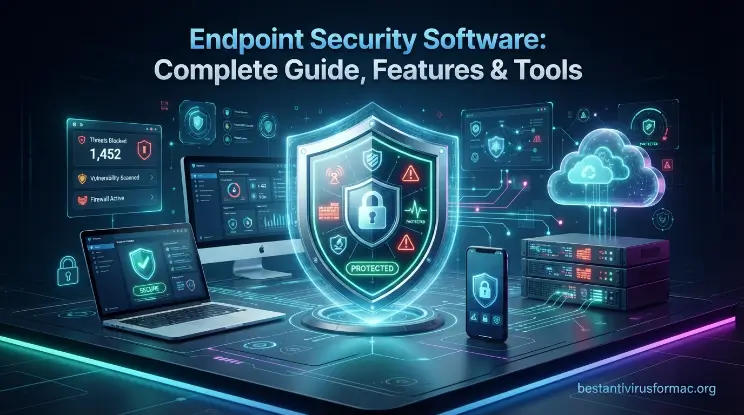
Endpoint Security Software works by continuously monitoring all connected devices in a network to detect, prevent, and respond to cyber threats in real time. It uses advanced technologies such as behavioral analysis, machine learning, and cloud-based intelligence to identify suspicious activity before it can cause harm. The system collects data from endpoints, analyzes patterns, and enforces security policies automatically across all devices. This ensures complete visibility, faster threat response, and stronger protection against malware, ransomware, and unauthorized access in modern digital environments.
Key Working Points
- Continuously monitors endpoint activity for suspicious behavior and potential cyber threats in real time.
- Collects device data and system logs to analyze user actions and application behavior patterns
- Uses AI and machine learning to detect unknown threats and abnormal system activities effectively
- Compares behavior against known threat intelligence databases for accurate malware identification
- Automatically blocks malicious files, processes, and unauthorized network connections instantly.
- Sends real-time alerts to security teams when potential threats or breaches are detected
- Isolates infected devices from the network to prevent the spread of cyberattacks across systems
- Applies security policies centrally across all connected endpoints for consistent protection
- Updates threat intelligence databases regularly through cloud-based security infrastructure systems
- Provides detailed reports and analytics for incident investigation and cybersecurity improvement decisions
Types of Endpoint Security Solutions
Endpoint Security Software is available in different deployment models and architectures, each designed to meet specific organizational needs, infrastructure sizes, and security requirements. As businesses adopt cloud computing, remote work, and hybrid IT environments, the demand for flexible security solutions has increased significantly. These solutions vary in how they are deployed, managed, and scaled, but all aim to protect endpoints from malware, ransomware, and unauthorized access. In modern cybersecurity strategies, endpoint protection software plays a key role in ensuring consistent security coverage across diverse IT ecosystems.
Cloud-Based Endpoint Security
Cloud-based Endpoint Security Software is hosted on external cloud servers and managed through a centralized online platform. It allows organizations to monitor and protect all endpoints without requiring heavy on-premises infrastructure. This model is highly scalable and ideal for businesses with remote or distributed teams, as it provides security management from anywhere with an internet connection.
With endpoint protection software, cloud-based systems deliver automatic updates, real-time threat intelligence, and faster deployment across all devices. Since data processing happens in the cloud, it reduces the burden on local systems and ensures continuous protection against evolving cyber threats. This makes it a preferred choice for modern, fast-growing organizations.
On-Premise Solutions
On-premise Endpoint Security Software is installed and managed within an organization’s internal IT infrastructure. It gives businesses complete control over their security systems, data storage, and configurations. This model is often preferred by industries with strict compliance requirements, such as banking, government, and healthcare.
Using endpoint protection software in an on-premises setup allows organizations to maintain full ownership of sensitive data and security policies. However, it requires dedicated IT resources for maintenance, updates, and monitoring. While it offers high control and customization, it may lack the flexibility and scalability of cloud-based solutions.
Hybrid Security Models
Hybrid Endpoint Security Software combines both cloud-based and on-premises security features to offer a balanced approach. It allows organizations to store sensitive data locally while leveraging cloud capabilities for threat detection and analytics. This model is especially useful for businesses transitioning from traditional systems to cloud environments.
With endpoint protection software, hybrid models provide flexibility, scalability, and enhanced performance. They enable organizations to optimize resource usage while maintaining strong security controls across all endpoints. This approach is increasingly popular among enterprises seeking both control and innovation in their cybersecurity strategy.
EDR vs XDR Solutions
EDR (Endpoint Detection and Response) focuses specifically on monitoring and securing endpoints by detecting suspicious activities and responding to threats at the device level. It provides deep visibility into endpoint behavior and helps security teams investigate and contain attacks efficiently.
In contrast, XDR (Extended Detection and Response) expands protection beyond endpoints by integrating data from networks, servers, cloud environments, and applications. With endpoint protection software, XDR delivers a more unified security approach, enabling faster threat correlation and broader visibility across the entire IT ecosystem, making it more advanced than traditional EDR systems.
Endpoint Security vs Traditional Antivirus
Endpoint Security Software and traditional antivirus solutions both aim to protect systems from cyber threats, but they differ significantly in scope, intelligence, and overall effectiveness. Antivirus software primarily focuses on detecting and removing known viruses using signature-based methods, while endpoint security provides a much broader and more advanced defense system. It combines real-time monitoring, behavioral analysis, and centralized management to protect against modern threats such as ransomware, zero-day attacks, and advanced persistent threats. In today’s evolving cyber landscape, endpoint protection software is considered far more suitable for businesses due to its comprehensive and proactive security approach.
Compression Table
| Feature | Traditional Antivirus | Endpoint Security Software |
| Threat Detection | Signature-based detection of known viruses | AI-based, behavioral, and real-time threat detection |
| Protection Scope | Limited to malware and viruses | Covers malware, ransomware, phishing, and zero-day attacks |
| Response Capability | Manual or basic automated removal | Advanced automated response and containment |
| Visibility | Limited device-level visibility | Centralized visibility across all endpoints |
| Management | Individual device management | Centralized security management console |
| Threat Intelligence | Minimal or outdated updates | Real-time cloud-based threat intelligence |
| Ransomware Defense | Basic or limited protection | Advanced ransomware detection and rollback |
| Network Protection | Not included or minimal | Includes firewall and network activity monitoring |
| Scalability | Limited for enterprises | Highly scalable for businesses of all sizes |
| Use Case | Personal or small-scale use | Enterprise and large-scale organizational security |
Benefits of Endpoint Security Software
Endpoint Security Software provides organizations with advanced protection against modern cyber threats by securing every device connected to the network. It helps businesses prevent malware, ransomware, phishing, and unauthorized access through continuous monitoring and real-time threat detection. By using centralized management and intelligent automation, it improves security efficiency and reduces the risk of data breaches. In today’s digital environment, endpoint protection software is essential for maintaining operational continuity, safeguarding sensitive information, and ensuring compliance with industry security standards across all endpoints.
Key Benefits
- Enhances real-time threat detection and prevents malware, ransomware, and phishing attacks across all connected devices
- Provides centralized security management for monitoring, controlling, and protecting multiple endpoints efficiently from one dashboard
- Reduces risk of data breaches through advanced encryption, access control, and continuous behavioral analysis of system activity
- Improves compliance with regulatory standards like GDPR, HIPAA, and other cybersecurity frameworks across industries globally
- Ensures business continuity by minimizing downtime through automated threat response and rapid incident containment capabilities
Top Use Cases of Endpoint Security Software
Endpoint Security Software is widely used across different industries to protect digital systems, sensitive data, and connected devices from growing cyber threats. As organizations expand their IT infrastructure and adopt cloud-based operations, the need for advanced endpoint protection becomes more critical than ever. These solutions help businesses detect, prevent, and respond to cyberattacks in real time while ensuring compliance with security standards. In modern cybersecurity environments, endpoint protection software plays a key role in maintaining secure, reliable, and efficient digital operations across all sectors.
Enterprise Cybersecurity
Endpoint Security Software is essential for large enterprises that manage thousands of devices and complex IT infrastructures. It provides centralized visibility and control, allowing IT teams to monitor all endpoints from a single dashboard. This helps organizations quickly identify vulnerabilities and respond to potential threats before they escalate.
With endpoint protection software, enterprises can protect sensitive business data, intellectual property, and internal communications from cybercriminals. It also supports compliance with global security regulations and ensures consistent protection across all departments and locations, making it a core part of enterprise cybersecurity strategy.
Remote Workforce Protection
In remote work environments, Endpoint Security Software ensures that employees can securely access company systems from any location. It protects devices used outside the traditional office network, where security risks are generally higher due to public Wi-Fi and personal device usage.
Using endpoint protection software, organizations can enforce security policies, monitor remote devices, and prevent unauthorized access to corporate resources. It also enables secure VPN connections, data encryption, and real-time threat detection to safeguard distributed workforces effectively.
Financial Institutions
Endpoint Security Software is critical for banks, insurance companies, and other financial organizations that handle highly sensitive customer and transaction data. These institutions are prime targets for cyberattacks due to the high value of financial information.
With endpoint protection software, financial institutions can detect fraudulent activities, prevent data breaches, and ensure secure online transactions. It also helps maintain compliance with strict financial regulations and protects against advanced threats like phishing, ransomware, and insider attacks.
Healthcare Systems
In the healthcare sector, Endpoint Security Software protects patient records, medical devices, and hospital networks from cyber threats. Healthcare organizations are often targeted by attackers because of the sensitive nature of medical data.
Using endpoint protection software, hospitals and clinics can secure electronic health records (EHRs), prevent unauthorized access to medical systems, and ensure compliance with healthcare regulations. It also helps safeguard connected medical devices, ensuring patient safety and uninterrupted healthcare services.
Challenges in Endpoint Security
Endpoint Security Software faces several challenges as modern IT environments become more complex and cyber threats continue to evolve. Organizations now operate with a growing number of devices, cloud applications, and remote connections, which significantly increases the attack surface. At the same time, cybercriminals are using more advanced techniques such as AI-driven malware and zero-day exploits. In this environment, endpoint protection software must constantly adapt to maintain strong defense, visibility, and control across all endpoints while minimizing security gaps.
Increasing Attack Surface
The increasing attack surface is one of the biggest challenges for Endpoint Security Software because organizations now use thousands of connected devices. Each laptop, mobile phone, server, or IoT device becomes a potential entry point for attackers.
With endpoint protection software, managing this large number of endpoints becomes more difficult as businesses expand. More devices mean more vulnerabilities, making it harder to maintain consistent security policies and real-time monitoring across the entire network.
Remote Work Risks
Remote work has significantly increased security risks for Endpoint Security Software because employees often access company systems from unsecured home networks or public Wi-Fi. This creates opportunities for attackers to intercept data or exploit weak connections.
Using endpoint protection software, organizations must secure devices outside the traditional office environment. However, ensuring consistent protection across remote endpoints is challenging due to varying user behavior, unmanaged devices, and inconsistent network security standards.
Complex IT Environments
Modern IT infrastructures are highly complex, which creates another major challenge for Endpoint Security Software. Organizations often use a mix of on-premises systems, cloud platforms, and third-party applications, making it difficult to maintain unified security control.
With endpoint protection software, integrating all these environments into a single security framework can be complicated. Differences in systems, configurations, and compatibility issues often make monitoring and threat detection more difficult, increasing the risk of security blind spots.
Future of Endpoint Security Software
Endpoint Security Software is rapidly evolving to meet the demands of an increasingly complex and threat-filled digital landscape. As cyberattacks become more sophisticated, organizations are shifting toward smarter, automated, and AI-driven security solutions. Future endpoint protection will focus on predictive threat detection, real-time response automation, and deeper integration with cloud ecosystems. Businesses will rely more on endpoint protection software that can analyze massive data streams, identify hidden attack patterns, and prevent breaches before they occur. This evolution will make cybersecurity more proactive, intelligent, and resilient across all industries.
Key Future Trends
- AI-driven detection improves accuracy and predicts cyber threats before they cause system damage or data breaches globally.
- Zero Trust security models ensure no device or user is trusted without continuous verification and strict authentication processes.
- Automation enhances incident response speed by instantly isolating threats and reducing manual intervention in security operations.
- Cloud-native endpoint security expands protection across distributed systems, remote users, and hybrid infrastructure environments efficiently.
- Integration with XDR platforms provides unified visibility across endpoints, networks, applications, and cloud-based security layers.
- Machine learning continuously adapts security systems to evolving malware patterns and emerging cyberattack techniques worldwide.
- Behavioral analytics identifies abnormal user activities and stops insider threats before they impact critical business systems.
- Real-time threat intelligence sharing improves global cybersecurity collaboration and faster response to widespread cyber incidents.
- Lightweight security agents reduce system performance impact while maintaining strong endpoint protection capabilities across devices.
- Fully autonomous cybersecurity systems enable self-healing networks that detect, respond, and recover from attacks automatically.
Frequently Asked Questions
What is Endpoint Security Software used for?
Endpoint Security Software is used to protect devices like laptops, mobiles, and servers from cyber threats. It prevents malware, ransomware, phishing, and unauthorized access through continuous monitoring and real-time protection.
How is endpoint security different from antivirus?
Antivirus mainly detects known viruses using signature-based methods, while Endpoint Security Software provides advanced protection using AI, behavioral analysis, and real-time monitoring.g
Do small businesses need endpoint security?
Yes, small businesses need Endpoint Security Software because they are frequent targets of cyberattacks due to weaker defenses. Endpoint protection software helps secure sensitive data, customer information, and business operations from evolving cyber threats.
What is EDR in endpoint security?
EDR (Endpoint Detection and Response) is a feature of Endpoint Security Software that monitors endpoint activity, detects threats, and enables quick response actions. Endpoint protection software uses EDR to investigate incidents and isolate infected devices.
Is endpoint security necessary for remote work?
Yes, Endpoint Security Software is essential for remote work environments where devices connect from unsecured networks. Endpoint protection software ensures secure access, data encryption, and real-time threat detection for remote employees.
Conclusion
Endpoint Security Software has become a fundamental requirement for protecting modern digital environments where cyber threats are constantly evolving and becoming more sophisticated. From detecting malware and ransomware to providing real-time monitoring and automated response, it ensures that every connected device remains secure and compliant with organizational policies. Unlike traditional security tools, it delivers a proactive and intelligent defense system that adapts to new threats as they emerge. In today’s interconnected world, endpoint protection software is essential for maintaining data security, business continuity, and overall cybersecurity resilience across all industries.
As organizations continue to adopt cloud computing, remote work models, and complex IT infrastructures, the importance of Endpoint Security Software will only increase. It not only reduces the risk of cyberattacks but also strengthens visibility, control, and incident response capabilities. Businesses that invest in advanced endpoint protection are better equipped to safeguard sensitive information, meet compliance requirements, and stay ahead of cybercriminals in an increasingly dangerous digital landscape.