
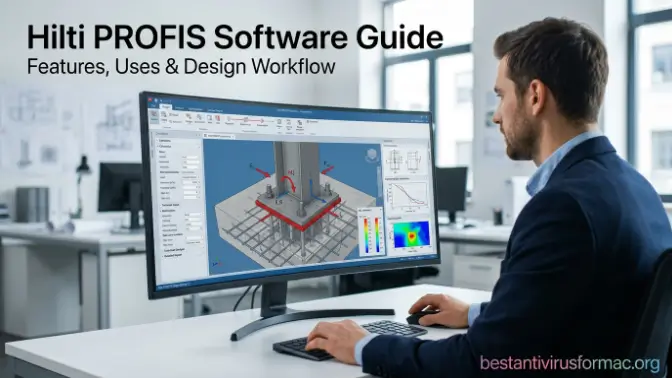
Welcome to bestantivirusformac. The Hilti PROFIS software is a specialized engineering solution designed for precise analysis and design of anchoring systems used in construction projects. It plays a key role in modern structural engineering software by helping engineers calculate loads, select appropriate anchors, and ensure safe connections between concrete and steel structures. With increasing demand for accuracy in anchor design software, this tool has become essential for professionals working on complex construction and infrastructure projects where safety and performance cannot be compromised.
In today’s engineering environment, manual calculations are no longer efficient for handling complex anchor load calculation and design verification process requirements. The Hilti PROFIS platform automates these tasks by providing advanced simulation, compliance with international standards such as Eurocode, and detailed reporting features. This makes it easier for engineers to evaluate structural behavior under different conditions while reducing errors and saving time. As a result, it has become a trusted choice in concrete fastening design and structural analysis software applications across civil and structural engineering.
What is Hilti PROFIS?
Hilti PROFIS is an advanced engineering software used for designing and verifying anchoring systems in construction and infrastructure projects. It works as a specialized structural engineering software that helps engineers calculate loads, analyze structural behavior, and choose safe fastening solutions for concrete and steel connections. The main purpose of this tool is to reduce design complexity while improving safety, accuracy, and compliance with international engineering standards. It is widely used in modern construction because it replaces manual calculations with automated anchor load calculation and verification processes. Engineers use it to assess tension, shear, and combined forces on anchors in real conditions. In this way, Hilti PROFIS ensures that every design decision is based on accurate data, making it reliable for concrete fastening design and structural safety evaluation in civil engineering projects.
Evolution of digital engineering tools
The evolution of digital engineering tools has completely transformed the construction and design industry over the last few decades. In the past, engineers depended heavily on manual calculations, hand-drawn diagrams, and basic spreadsheet-based methods for anchor design software tasks. These methods were not only time-consuming but also increased the chances of human error, especially in large and complex structural projects where precision is critical.
With the advancement of technology, modern engineering design software like Hilti PROFIS introduced automation, simulation, and real-time analysis into the workflow. This allowed engineers to test different design scenarios quickly, verify compliance with standards such as Eurocode, and improve decision-making in structural planning. As a result, the entire design process became faster, more accurate, and much more efficient for large-scale construction work.
Why engineers use PROFIS over manual calculations
Engineers prefer Hilti PROFIS over manual calculations because it significantly improves both accuracy and productivity in structural design work. Manual methods often require repetitive calculations and careful checking, which increases workload and the risk of mistakes in the critical design verification process steps. PROFIS automates these processes, ensuring that results are consistent, reliable, and based on engineering standards.
Key advantages of Hilti PROFIS include:
- Faster and more precise anchor load calculation for complex structures
- Automated safety checks for tension, shear, and combined loading conditions
- Built-in compliance with international codes like Eurocode and other standards
- Advanced reporting tools for documentation and project approval
- Clear visualization of load distribution and anchor performance in real time
Because of these features, this structural analysis software is widely trusted in civil and structural engineering projects. It not only reduces manual workload but also enhances design confidence, helping engineers deliver safer and more efficient construction solutions.
Read also: Latest Endpoints News: Security Updates, Threats & Intelligence
Key Features of Hilti PROFIS
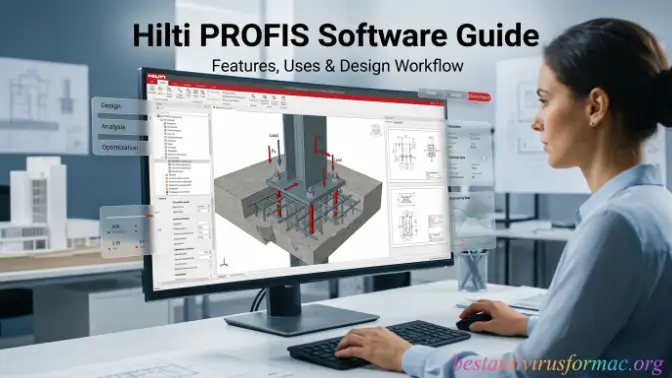
The Hilti PROFIS software offers a wide range of advanced features that make structural design faster, safer, and more accurate. It is widely used as a structural engineering software because it automates complex calculations, supports international standards, and provides detailed analysis for anchoring systems in concrete and steel structures. These features help engineers improve efficiency while maintaining high safety and design quality in construction projects.
Load calculation accuracy
One of the most important features of Hilti PROFIS is its highly accurate anchor load calculation system. The software automatically evaluates different forces such as tension, shear, and combined loads to ensure that the selected anchor system can safely handle real-world conditions. This reduces the risk of human error that often occurs in manual calculations and improves overall design reliability.
It also performs detailed structural analysis software functions by checking load distribution and safety factors based on engineering standards. This ensures that every design decision is backed by precise and verified data, making it suitable for critical civil and structural engineering applications.
Integration with BIM and CAD workflows
Hilti PROFIS integrates smoothly with modern BIM and CAD systems, making it easier for engineers to use it within existing engineering design software workflows. This allows design data to be shared directly between modeling tools and analysis platforms, reducing duplication of work and improving project coordination.
- Supports seamless data exchange with BIM platforms
- Improves collaboration between design and construction teams
- Reduces errors caused by manual data transfer
- Enhances efficiency in large-scale construction projects
- Enables better visualization of structural connections
This integration makes Hilti PROFIS a powerful tool in modern construction environments, where digital coordination and accuracy are essential for successful project delivery.
Types of Hilti PROFIS Tools
Hilti PROFIS is a complete engineering suite that includes multiple specialized modules designed to handle different structural tasks in construction projects. It is widely used as a structural engineering software because each tool focuses on a specific area, such as anchoring, reinforcement, and installation planning. Together, these tools help engineers improve accuracy, reduce manual effort, and ensure safe structural design in modern civil engineering projects.
PROFIS Anchor system design
The PROFIS Anchor tool is one of the most widely used modules in Hilti PROFIS, designed specifically for anchoring systems in concrete structures. It allows engineers to perform detailed anchor load calculations by analyzing different forces such as tension, shear, bending, and combined loads acting on anchor points. This helps in selecting the most suitable anchor type and size based on real structural conditions.
This tool is highly important in concrete fastening design because it ensures that every anchor is tested against safety limits and international standards like Eurocode. Engineers can simulate different load cases, check failure modes, and evaluate safety factors before final installation. This reduces the risk of structural failure and improves long-term reliability in construction projects.
Rebar reinforcement design tool
The PROFIS Rebar module is focused on reinforcement design in reinforced concrete structures. It helps engineers design proper rebar layouts that improve load distribution and increase the overall strength of structural elements. This tool plays a key role in ensuring that concrete structures can safely handle heavy loads and environmental stress.
Key functions of PROFIS Rebar include:
- Designing optimized reinforcement connections in concrete elements
- Improving accuracy in structural analysis software for reinforced structures
- Ensuring correct load transfer between slabs, beams, and columns
- Supporting compliance with international codes and safety standards
- Reducing manual calculation errors in reinforcement detailing
This tool is especially useful in large-scale construction projects where precision and structural safety are critical. Automating reinforcement design, it saves time and ensures more reliable engineering outcomes.
How to Use Hilti PROFIS (Step-by-Step)
Using Hilti PROFIS involves a clear step-by-step workflow that helps engineers design and verify anchoring systems in a structured and accurate way. As a structural engineering software, it guide users from initial project setup to final reporting, ensuring every stage of the design process follows engineering standards and safety requirements. This systematic approach reduces errors and improves efficiency in anchor design software applications.
Input parameters and calculations
In this stage, engineers enter all essential project data into Hilti PROFIS, including structural geometry, material properties, and applied loads. These inputs are critical for performing accurate anchor load calculations because even small changes in values can affect the final design outcome. The software then processes this information to simulate real structural behavior under different load conditions.
After entering the data, Hilti PROFIS automatically performs detailed engineering calculations based on international standards such as Eurocode. It evaluates tension, shear, and combined forces acting on the anchoring system to ensure the design meets required safety levels. This helps engineers quickly identify suitable fastening solutions without relying on manual calculation methods.
Verification and safety checks
Once calculations are completed, Hilti PROFIS performs built-in verification checks to ensure the design is safe and compliant with engineering standards. It compares calculated loads with allowable limits and highlights any potential risks in the design verification process. This step is essential for maintaining structural integrity and preventing failure in real-world applications.
Key safety checks include:
- Verification of tension and shear resistance
- Checking combined load effects on anchors
- Ensuring compliance with international design codes
- Identifying potential failure modes in concrete or steel connections
- Validating safety factors for long-term structural performance
These checks make Hilti PROFIS a reliable structural analysis software tool, giving engineers confidence that their final design is both safe and efficient before moving to construction or installation.
Benefits of Using Hilti PROFIS
Hilti PROFIS provides major benefits in modern construction and structural engineering by making the design process faster, more accurate, and more reliable. It is widely used as a structural engineering software because it simplifies complex anchor design tasks and reduces the need for manual calculations. This improves overall project quality by ensuring safer designs, better compliance with international standards, and more efficient workflow management in concrete fastening design and structural analysis work.
Time and cost savings in construction
Hilti PROFIS helps engineers and construction teams significantly reduce both time and project cost by automating complex engineering calculations. Instead of performing repeated manual anchor load calculation and verification steps, the software quickly processes inputs and delivers accurate results. This reduces design time and allows engineers to focus more on planning and optimization rather than repetitive calculations.
In large construction projects, even small delays in design can increase overall costs. By speeding up the structural analysis software process, Hilti PROFIS ensures faster decision-making and reduces delays during project execution. This makes it highly valuable for contractors and engineers working under tight deadlines.
- Faster completion of structural analysis software tasks — It reduces time spent on manual calculations and speeds up the design workflow.
- Reduced material waste through accurate design optimization — It ensures correct anchor selection, so no extra or wrong materials are used.
- Lower labor costs due to minimized rework and corrections — Fewer design mistakes mean less time and money spent fixing errors.
- Early detection of design issues before construction begins — It identifies structural problems in the planning stage, preventing costly site changes.
- Improved project planning and resource allocation — It helps teams organize time, materials, and workforce more efficiently.
System Requirements & Compatibility
Hilti PROFIS requires a compatible system setup to ensure smooth performance during engineering calculations and design work. As a structural engineering software, it needs a stable operating environment because it handles complex anchor load calculation, 3D modeling, and verification tasks. Proper system compatibility is important for avoiding slow performance and ensuring accurate results in engineering design software workflows used in construction and civil engineering projects.
- Supported operating systems: Works mainly on Windows-based systems, providing stable performance for engineering applications.
- Required hardware: Needs a modern processor, sufficient RAM, and good graphics support for smooth handling of structural analysis software tasks.
- Cloud and desktop usage: Can be used both offline (desktop version) and online, allowing flexibility for different project environments.
- BIM integration support: Easily connects with BIM tools to improve coordination between design, modeling, and construction teams in real projects.
Common Mistakes in Hilti PROFIS
Hilti PROFIS is a powerful structural engineering software, but incorrect inputs or poor understanding of design conditions can still lead to serious errors in anchoring design. Most mistakes happen during anchor load calculation when engineers assume wrong loads, choose unsuitable materials, or ignore real project conditions. These issues can directly affect safety, performance, and compliance in concrete fastening design, so careful setup and verification are always necessary.
H3: How to avoid design errors
Design errors in Hilti PROFIS can be avoided by following a careful and structured engineering approach. Engineers should always ensure that all input data matches real site conditions and that assumptions are technically correct. A proper understanding of load behavior and material properties is essential to maintain accuracy in the design verification process and avoid failures in structural design.
A second important step is reviewing and validating all software outputs before final approval. Even though Hilti PROFIS automates anchor load calculation, engineers must still check results critically and ensure compliance with engineering standards. This combination of software accuracy and human review helps maintain safe and reliable structural performance.
- Double-check load inputs before calculation — Ensures that anchor load calculation is based on correct forces and real project conditions.
- Select correct material properties — Proper concrete and steel selection improves accuracy in structural analysis software results.
- Consider environmental conditions — Factors like corrosion, temperature, and moisture must be included in design assumptions for safety.
- Review software output carefully — Helps identify mistakes or unusual results before final approval of the design.
- Follow engineering standards strictly — Ensures full compliance with Eurocode and other international safety regulations.
Alternatives to Hilti PROFIS
Hilti PROFIS is a widely used structural engineering software, but it is not the only option available for anchor design and structural analysis. In many engineering projects, professionals also consider other tools depending on project size, budget, and required features. These alternatives are used for similar tasks like anchor load calculation, structural modeling, and design verification, especially when engineers need different workflows or more flexible engineering solutions.
- Other structural design software — These tools offer similar functions for structural analysis software tasks, including load checking, modeling, and safety verification for concrete and steel structures.
- General engineering tools comparison — Engineers often compare multiple engineering design software options to find the best balance between accuracy, cost, and ease of use for their specific projects.
- When alternatives are useful — Alternatives become helpful when projects require lower-cost solutions, simpler interfaces, or integration with different CAD and BIM systems instead of full advanced suites like Hilti PROFIS.
Frequently Asked Questions
What industries commonly use Hilti PROFIS software?
It is widely used in civil engineering, construction, and infrastructure projects where accurate anchoring and structural safety design are required.
Does Hilti PROFIS require advanced engineering knowledge?
Basic structural engineering understanding is recommended because the software deals with load analysis and safety verification of complex systems.
Can Hilti PROFIS be used for small construction projects?
Yes, it can be used for both small and large projects, but it is most effective in complex structural designs where precision is critical.
How does Hilti PROFIS improve project safety?
It reduces calculation errors by automating analysis and ensuring that designs meet international engineering standards before construction begins.
Is an internet connection necessary to use Hilti PROFIS?
Some features work offline, but certain updates, integrations, and cloud-based functions may require an active internet connection.
Conclusion
Hilti PROFIS is a modern engineering tool that helps engineers design safe and accurate anchoring systems. It simplifies complex structural engineering software tasks and makes the anchor load calculation process faster and more reliable. This improves design quality and reduces mistakes in construction projects. It is widely used in civil and structural engineering for better planning and safety control.
In short, Hilti PROFIS improves both speed and accuracy in engineering work. It supports better decision-making and ensures compliance with international standards. With its advanced features and easy workflow, it has become an important tool for modern concrete fastening design and structural analysis.